
Diftar: (r)evolution in waste collection for VMEs
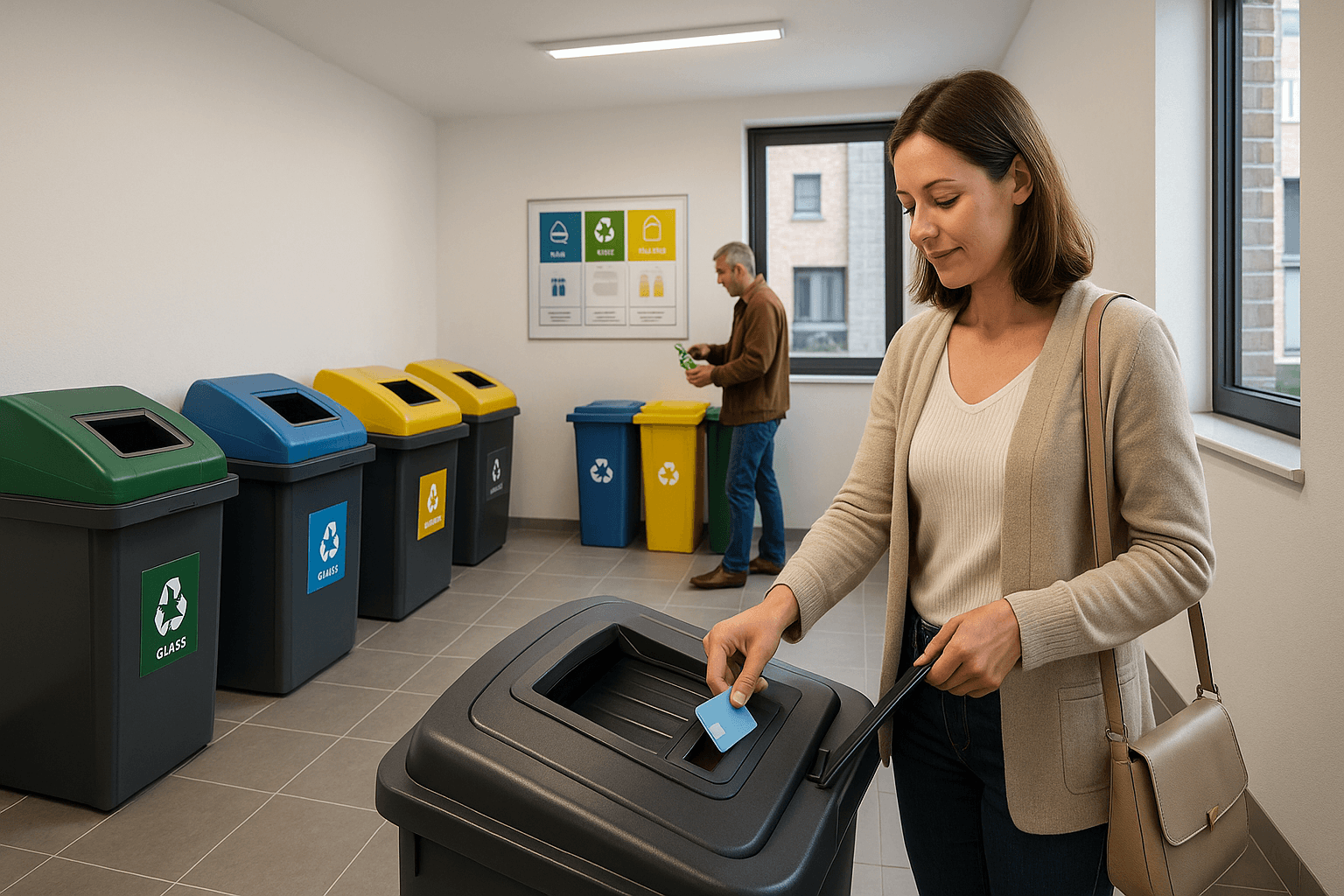
Flanders is increasingly focusing on waste prevention and reuse. The objective is clear: the amount of residual waste per inhabitant must be below 90kg per year. To achieve this, more and more municipalities are switching to the diftar system. This means that each resident pays based on their actual waste production. For apartment buildings and VMEs, this transition has important consequences.
The diftar system works in two ways: containers with a chip or underground containers that are opened and weighed via a card. At the same time, sorting of organic waste (GFT) becomes mandatory. Instead of throwing everything in the residual waste, residents must offer their vegetable, fruit and garden waste separately. This compostable waste gains value and contributes to the circular economy.
For apartment buildings, the switch to diftar means concrete changes on various fronts:
Classic garbage bags make way for waste containers or underground systems that are opened with a badge. This can lead to overcrowded waste rooms, which can result in fire hazards and blocked evacuation routes. Good planning of the waste space is therefore crucial.
Organic waste is sensitive to odor, mold and pests. Regular emptying and good hygiene are an absolute must. For VMEs, this means extra attention to the maintenance of waste rooms and possibly more frequency in collection.
If the building works with shared containers, the cost is distributed over the VME. This can lead to unfair situations where residents with little waste also pay for residents with a lot of waste. An open and fair distribution key in the deed of division therefore becomes important.
The switch to diftar means more work for the property manager: communication with residents, making agreements about waste separation, managing invoicing and monitoring cost distribution. Waste management itself also becomes a responsibility of the property manager.
For VMEs, it is important to think in time about the implementation of diftar. This goes beyond just placing different containers. It requires clear agreements within the VME, transparent cost distribution and practical solutions around space, hygiene and accessibility.
Good preparation can prevent many problems. Think of: - Sufficient space for the different waste streams - Clear communication to all residents about the new rules - A fair distribution key for the costs - Regular maintenance of waste rooms - Clear instructions about what belongs where
By properly regulating these aspects, sustainable and workable waste management can be guaranteed. The switch to diftar is not only an obligation, but also an opportunity to make residents more aware of their waste production and contribute to a cleaner living environment.
Sebas, Property Manager across Flanders
Sebas is a modern property manager active across all of Flanders. We combine 15+ years of experience with transparent communication and decisive technical management. From General Assemblies to maintenance priorities: we provide professional building management you can rely on.
Want to know how we can help your VME? Contact us without obligation for advice or a custom quote.