
Solar panels in co-ownership: energy sharing from A to Z
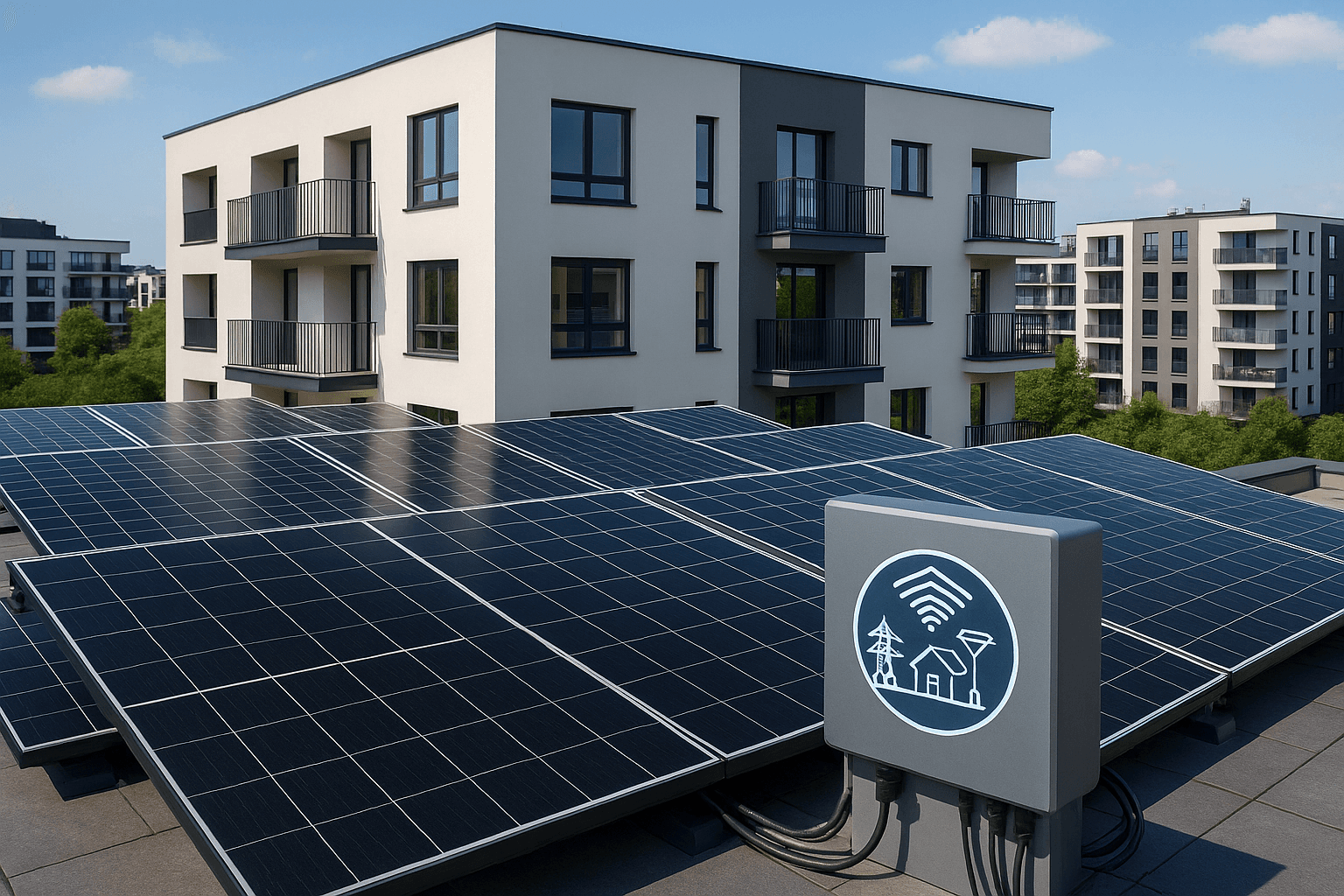
Until a few years ago, solar panels in an apartment building were less attractive. The generated power could only be used for the common parts, such as the elevator or the lighting in the entrance hall. Surpluses were put on the grid for limited compensation. Thanks to the introduction of energy sharing, that has changed. Today, the power can also be distributed or even sold to co-owners or residents. This opens up many new opportunities for VMEs.
Energy sharing can take different forms. A first possibility is energy sharing within one building. The generated power is distributed among participants according to a pre-agreed distribution key. Important: no compensation may be agreed here, it is about free sharing of energy. A second option is to sell energy within one building. In that case, the power is compensated by the recipients. The price is agreed between seller and recipients. Finally, there are energy communities, where residents unite in a legal entity to produce, use, store energy and even provide grid support services. This can be as a citizen energy community or as a renewable energy community.
In all cases, a number of conditions apply. For example, participants must have a digital meter or an AMR meter and measurement regime 3 must be activated with the energy supplier. This regime allows the quarter-hour values of consumption to be read, so that the distribution can be done correctly. Each participant must also have their own connection and a contract with a commercial energy supplier.
Energy sharing has a direct impact on the bill. For the recipient, it means a reduction in energy costs: they take less from their supplier. For the energy sharer, costs increase because they share their energy for free. If one chooses to sell, the parties agree on a price and billing takes place. In both cases, the supplier remains responsible for grid rates, levies and contributions for green power and CHP.
How is the generated power distributed? This can be done according to three distribution keys. With a fixed distribution key, the power is distributed per quarter hour according to a fixed schedule. With a relative distribution key, the distribution is adjusted proportionally if this leads to better utilization. And with an optimal distribution key, the distribution continues until the generated energy is maximally utilized by all participants in that quarter. This way, as little energy as possible is lost.
How do you concretely start with energy sharing? First, you assemble the group and determine who becomes the manager. Then you contact the energy suppliers to check the conditions. Next, you provide digital meters and activate measurement regime 3. Then you request the energy sharing group via the Fluvius portal and all participants give their consent. Once everything is active, Fluvius calculates the shared energy based on the quarter-hour values of the meters. The suppliers then adjust the participants' bills.
For VMEs, this is a unique opportunity. Solar panels thus become not only an investment for common costs, but also a way to let residents directly enjoy green energy. By tackling it together smartly, an apartment building can reduce its energy costs and contribute to climate goals.
Source: CIBsyndic September 29, 2023
Sebas, Property Manager across Flanders
Sebas is a modern property manager active across all of Flanders. We combine 15+ years of experience with transparent communication and decisive technical management. From General Assemblies to maintenance priorities: we provide professional building management you can rely on.
Want to know how we can help your VME? Contact us without obligation for advice or a custom quote.